Polar Graph Paper Circular Graph Paper: A Practical Guide for Designers, Makers, and Analysts
Standard grid paper assumes a square world. But not all data, designs, or problems fit neatly into Cartesian coordinates. Radar screens, sound waves, spiral patterns, compass bearings, and mandalas all revolve around a single center point. This is where polar graph paper, or circular graph paper, becomes an essential tool rather than a niche specialty. It bridges the gap between abstract radial concepts and tangible, printable execution.
When you are working with a detailed KDP interior, plotting complex mathematical functions, or sketching a radial pattern for a craft project, the precision of your grid directly impacts the quality of your final output. A well-constructed polar grid saves hours of setup time, eliminates measurement errors, and allows you to focus entirely on the work itself.
Understanding the Grid: 0.2-Inch vs. 0.25-Inch for Your Workflow
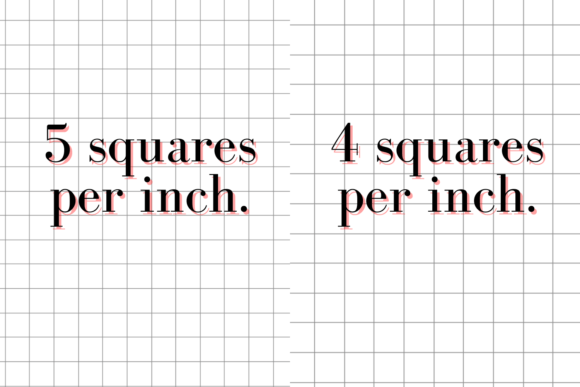
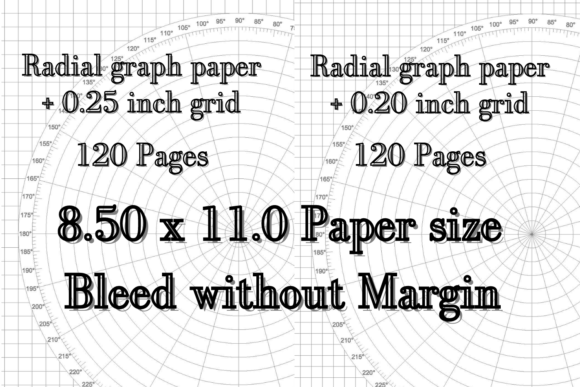
Before diving into any radial project, selecting the right granularity is your first practical decision. The two PDF formats—one with 0.2-inch ruled squares and the other with 0.25-inch ruled squares—serve distinct purposes within a broader workflow. Choosing the wrong one adds friction. Choosing the right one makes execution seamless.
The Case for Fine Granularity (0.2-Inch Grid)
The 0.2-inch grid, with a maximum circle diameter of 7.60 inches and 1-inch radius increments up to 3.8 inches, offers higher resolution. This format is ideal when your work demands precision. Engineers plotting antenna radiation patterns, mathematicians graphing rose curves with multiple petals, or data analysts creating detailed radar charts benefit from the tighter grid. The smaller squares provide a finer reference frame for interpolation, meaning you can estimate values between the 1-inch radius lines with greater accuracy.
In a practical workflow, this format functions as a high-fidelity recording tool. You spend less time estimating and more time plotting. The 1-degree and 5-degree markings, combined with the 0.2-inch squares, allow for micro-adjustments that would be difficult to achieve with a standard protractor and ruler setup.
The Case for Standard Clarity (0.25-Inch Grid)
The 0.25-inch grid, with a 7.50-inch maximum diameter and 1-inch radius increments up to 3.75 inches, prioritizes clarity and readability. This is your go-to format for teaching polar coordinates, sketching initial design concepts, or charting moderate datasets where visual simplicity is paramount.
If you are an educator preparing a lesson, the larger squares reduce visual clutter for students who are new to the concept of radians and angles. If you are a fiber artist designing a circular knitting or crochet pattern, the 0.25-inch grid provides enough structure without overwhelming your hand-drawn stitches. The heavier 15-degree lines establish clear anchor points, while the 5-degree and 1-degree marks offer guidance when you need to refine a curve or a symmetry line.
Integrating Circular Graphs into Creative and Technical Workflows
Polar graph paper is not a standalone tool. Its real power emerges when you integrate it into a larger process involving other methods, resources, and platforms. Whether you work entirely by hand or combine analog plotting with digital tools, understanding how the grid interacts with your environment is critical.
From Planning to Plotting: The Before Phase
Preparation is straightforward but essential. Both PDF files are formatted with full bleed and no margin on an 8.5 x 11-inch page. This means the grid extends to the very edge of the trim. For KDP publishers, this specification removes the guesswork around print margins. For personal use, it maximizes your plotting area.
- Printing: Use 24-pound or 32-pound paper to prevent ink bleed-through, especially if you plan to use markers or gel pens for color-coding data sets.
- Digitizing: Scan your completed polar plots at 300 DPI. The center point and the 0/360-degree line serve as natural registration marks for aligning digital layers in software like Adobe Illustrator or Procreate.
- Tool Kit: Keep a compass, a flexible curve ruler, and a fine-tipped pen handy. The tiered degree markings (1, 5, and 15 degrees) mean you rarely need a separate protractor, but having one can speed up verification during complex drawings.
Execution: Using the Grid During a Project
The tiered degree marks are designed for efficiency. The heavy 15-degree lines establish the foundational axes. Think of these as your north, south, east, and west, plus the intermediate points. The 5-degree lines act as your secondary guidance system, and the 1-degree ticks allow for micro-precision.
Workflow Example: Designing a Geometric Mandala
- Establish Structure: Use the 15-degree lines to map out the 24 primary sections of your mandala. These are your symmetry mirrors.
- Layer Details: Use the 5-degree lines to place intermediate petals or geometric nodes. The concentric circles tell you exactly how far from the center each element sits without measuring.
- Refine Curves: Use the 1-degree marks and the fine grid squares to adjust the curvature of a petal or the angle of a repeating pattern. The visual feedback is immediate.
- Color Coding: Because the grid is so consistent, you can easily color-code different data ranges or design elements without crossing boundaries.
For engineers, this same workflow applies to data visualization. Plotting a directional antenna pattern becomes a matter of reading your gain values and marking them at the corresponding radius and degree intersection. The 1-inch radius increments provide a natural scale for your data units.
Precision Publishing: Leveraging the Grid for KDP Interiors
If you are a publisher, entrepreneur, or content creator on Amazon KDP, the technical specifications of these PDF files are designed to solve specific pain points. Low-content and medium-content books rely heavily on the user experience. A poorly scaled grid or incorrect margins undermine the utility of the product.
Both PDFs include full bleed with no interior margin. This is a deliberate design choice. In standard graph paper notebooks, margins create dead space. For polar graph paper, where the plotting area is naturally circular, maximizing the usable diameter is a clear advantage. The 7.60-inch and 7.50-inch diameters fit comfortably within the 8.5 x 11-inch trim size, even accounting for the bleed zone that gets trimmed off during binding.
From a quality control standpoint, this means the printed product meets the expectations of a technical audience. A mathematician or engineer purchasing this notebook needs absolute confidence that the scaling is accurate and that the grid is not cut off awkwardly on the page. The 120-page count provides substantial volume without being overwhelming, making it suitable for a single semester course, a dedicated project journal, or a professional sketchbook.
For publishers, having two distinct grid sizes in your catalog allows you to target different customer segments. The 0.2-inch grid appeals to users who prioritize detail and precision. The 0.25-inch grid appeals to users who value readability and ease of use. Offering both versions increases your product coverage without creating internal competition, as each serves a distinct workflow need.
Long-Term Integration and Quality Control
Adopting a specific format for your polar graph paper creates consistency across your work. When the page size (8.5 x 11), the bleed specification, and the scaling are standardized, you build a reliable resource library. Months or years later, you can revisit a scanned plot and overlay it with new digital data without worrying about scale mismatches.
Building a Resource Library
Use the 120 pages in each volume to log a single project or multiple iterations. Develop a simple indexing system. Note the grid size (0.2 or 0.25), the date, and the project title on the first page. Over time, this becomes a reference archive of your radial designs, mathematical proofs, or data visualizations. When a new project requires a similar spiral pattern or directional analysis, you can flip back to previous examples for inspiration or validation.
Ensuring Accuracy and Consistency
The degree markings every 1, 5, and 15 degrees are not arbitrary. The 15-degree marks provide the skeleton. The 5-degree marks provide the muscle. The 1-degree marks provide the skin. This hierarchy allows your eyes to quickly locate positions without counting every tiny tick mark. It reduces cognitive load during complex plotting sessions.
The 1-inch radius increments (up to 3.8 or 3.75 inches) are equally deliberate. They create a logical, easy-to-follow structure that mirrors the way we naturally think about distance from a center point. You can think in whole inches and then interpolate within the fine grid squares for sub-inch precision.
For long-term use, store your physical notebooks flat or in a standard filing cabinet. The 8.5 x 11-inch format ensures compatibility with standard document storage systems. If you digitize your work, the consistent scaling means you can create digital templates that overlay perfectly with your scanned analog drawings.
Whether you are publishing a specialized notebook on KDP, teaching polar coordinates to students, or solving a complex engineering problem, the right grid does more than guide your hand. It shapes the structure of your thinking itself. A precise, well-formatted polar graph paper allows you to focus on the creative or analytical task at hand, confident that the underlying framework is accurate, consistent, and ready to support your work from the first mark to the final product.