Contact List Log Book: The Endlessly Printable Address Solution
Most people have a drawer full of half-used address books. You buy one, fill in the first dozen entries, then leave it untouched for years. Eventually, you run out of space under "M" while "Z" stays completely blank. The Contact List Log Book solves this exact problem by letting you print exactly as many pages as you need, whenever you need them. It's a straightforward system for keeping track of the important names, addresses, and contact details in your life without the limitations of a pre-bound notebook.
Why the Traditional Address Book Fails
Standard address books come with a fixed number of pages, usually organized alphabetically. That structure forces you to guess how many people you'll add under each letter. If you have a large family or run a business with hundreds of clients, you quickly run out of space under common letters like "S" or "B." The Contact List Log Book eliminates this frustration entirely. You print fresh pages as needed, so you never face the dilemma of squeezing a new contact into a cramped margin or abandoning the book altogether.
Professionals especially benefit from this flexibility. A freelancer might need space for dozens of vendors, while an entrepreneur managing partnerships requires room for frequent additions. With this log book approach, you scale your contact management to fit your actual workload, not the other way around.
What Makes the Contact List Log Book Different
This isn't a complex software suite or a premium leather journal. It's a practical, minimalist tool designed for one thing: capturing contact information efficiently. Here are its defining characteristics:
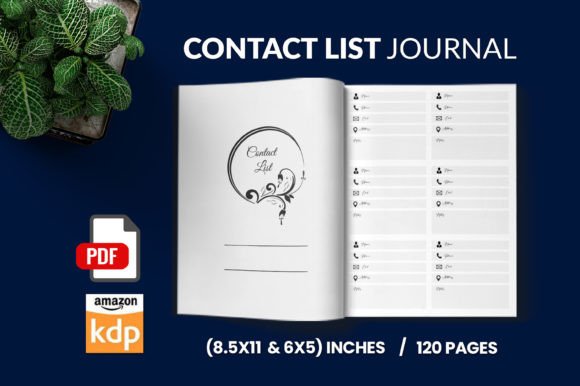
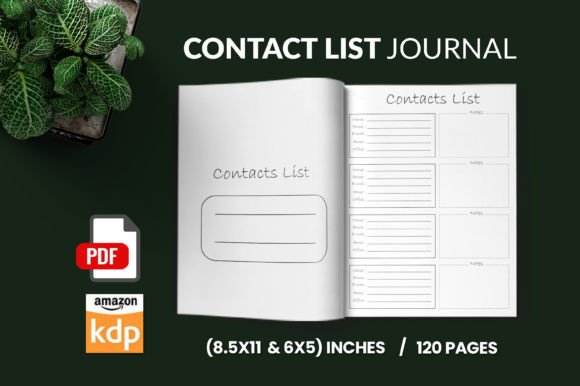
- 120 pages in the initial file, but you print only what you need, so the real limit is your printer paper
- Two size options: 8.5 x 11 inches for desk use and 6 x 9 inches for portability
- Printed on demand, meaning you generate pages when required, not all at once
- High-quality PDF file with a black and white minimalist interior for clean, readable entries
- No filler: no decorative borders, no irrelevant sections, just functional fields for names, addresses, phone numbers, emails, and notes
The minimalist design matters more than it seems. A busy interior with excessive graphics or colored backgrounds wastes ink and distracts from the information. The black and white layout ensures that every printed page is crisp, professional, and easy to scan at a glance.
Personal Use
For everyday life, the Contact List Log Book replaces the cluttered notes app or the sticky notes scattered across your fridge. Use it to track family members, friends, neighbors, your child's school contacts, and local service providers like plumbers or electricians. Print a new page whenever you meet someone you want to remember. The ability to add pages at will means you never need to erase old entries to make room for new ones.
Professional and Business Settings
Professionals deal with a constant stream of new contacts. A marketer might attend a conference and collect 30 business cards in one day. With this log book, you print a fresh page, log everyone, and file it alongside your existing records. Entrepreneurs can maintain separate sections for clients, suppliers, investors, and team members without worrying about running out of space. The 8.5 x 11 inch version fits neatly into a standard binder or folder, making it easy to integrate into existing office systems.
Educational Environments
Teachers, tutors, and professors often manage contact lists for students, parents, and colleagues. A Contact List Log Book provides a structured yet flexible way to keep this information organized. Print a master list for each class or semester, then add pages as new students arrive. The black and white interior keeps the focus on the data, which is especially useful when you need to quickly find a phone number during a busy school day.
Creative and Freelance Work
Freelancers and creatives juggle multiple clients, collaborators, and project contacts. A graphic designer might have separate lists for printers, illustrators, copywriters, and direct clients. With the print-on-demand nature of this log book, you maintain separate sections for each category. If one category grows faster than expected, you simply print more pages for that section. No wasted paper, no awkward reorganization.
Digital and Hybrid Use
You don't have to abandon digital tools to use a physical log book. Many professionals scan their completed pages or take photos with their phone for backup. The Contact List Log Book works well alongside a digital address book. Some prefer to use the printed pages for quick reference during meetings and then transfer selected contacts to their phone later. The PDF format also allows you to keep a digital copy on your device, so you can print specific pages when you know you'll be offline or traveling.
Benefits That Matter for Daily Use
Efficiency: A well-organized contact list saves time. Instead of scrolling through a phone or searching through old emails, you flip to a printed page and find what you need in seconds. The minimalist interior ensures that each entry is clearly laid out, reducing the chance of misreading a number or address.
Usability: The two size options cater to different workflows. The 8.5 x 11 inch version is ideal for desk work, while the 6 x 9 inch version fits in a bag or large pocket for people on the move. You choose the format that matches how you actually work.
Cost effectiveness: Because you print only what you need, you never pay for unused pages. This is especially valuable for teams or organizations that need multiple copies. One high-quality PDF serves everyone, and each person prints their own pages as required.
Customization potential: The black and white minimalist interior leaves room for personal annotation. You can highlight important contacts, add sticky notes, or categorize entries with your own color coding system. The simplicity of the design becomes a foundation for your own organizational methods.
Long-term reliability: Digital address books can be lost to sync errors, dead batteries, or platform changes. A printed log book doesn't depend on technology. As long as you have the PDF and a printer, you can always generate a fresh copy. This offline reliability is crucial for people who travel frequently or work in environments with limited internet access.
Realistic Use Cases and Observations
Consider a small business owner who manages a team of remote workers. They need a contact list that includes addresses for shipping equipment, emergency contacts, and direct phone numbers. A single Contact List Log Book page per employee keeps all this information in one place. As the team grows, the owner prints additional pages. No need to redesign a spreadsheet or migrate data to a new system.
A wedding planner might use the log book to track vendors, venues, and client family contacts. With multiple events running simultaneously, having a dedicated page for each wedding prevents confusion. The planner prints only the pages needed for current clients, avoiding a bulky binder full of irrelevant names.
A retiree who wants to keep in touch with a large extended family can use the 6 x 9 inch version for a compact, portable directory. They add new grandchildren or updated addresses simply by printing a new page. The tactile nature of a physical book often makes it easier to share with older relatives who prefer not to use smartphones.
Practical Considerations When Using the Log Book
Before you start, think about how you'll organize the pages. Some people prefer alphabetical order, while others group contacts by category such as family, friends, work, and services. The Contact List Log Book doesn't impose a structure, so you decide what works best. A simple divider system using tabs or colored paper can help you navigate the pages quickly.
Choose the size that matches your typical environment. If you work primarily from a desk, the 8.5 x 11 inch version offers more space per entry and fits standard binders. If you're often in meetings or on the go, the 6 x 9 inch version is easier to carry. Some users even keep both sizes, one for home and one for travel.
Consider your printing setup. The black and white interior is designed to be ink-efficient, but you'll still want a reliable printer. Because the pages are printed on demand, you can also take the PDF to a print shop if you prefer a professional finish. The high-quality file ensures sharp text and clean layouts regardless of where you print.
Finally, think about how you'll maintain the log book over time. Because you can always print fresh pages, there's no pressure to keep every entry forever. If a contact becomes irrelevant, simply leave the page out of the next printout. This fluidity makes the Contact List Log Book a living document that evolves with your relationships and responsibilities.
The real value of this system is that it adapts to you. You never need to worry about running out of space, filling up the wrong section, or being stuck with a partially used book that you'll never finish. Print a page when you need it, add the details, and move on. That simplicity is what makes the Contact List Log Book a genuinely useful tool for anyone who values organization without the overhead of complicated systems.