Why Preschool Math Number Tracing Pages Are Essential for Early Childhood Development
Every child's journey into the world of numbers begins with a single stroke. Whether it's drawing a wobbly "1" or carefully tracing a curved "3," those early encounters with digits lay the foundation for mathematical confidence. Preschool math number tracing pages have become a go-to resource for parents, teachers, and self-publishers alike, offering a simple yet powerful way to introduce numbers 1 to 10. This article explores everything you need to know about these print-ready files, from their educational purpose to their practical use in Amazon KDP publishing, and why they help children enjoy learning from the very start.
What Are Preschool Math Number Tracing Pages?
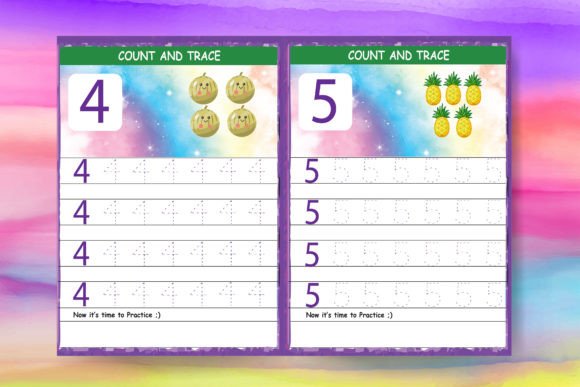
At their core, number tracing pages are structured worksheets designed to guide a child's hand as they practice writing each numeral. A typical preschool number tracing workbook includes activities such as tracing the number, counting objects, coloring the digit, and associating numbers with familiar items like fruit. For instance, a page for the number 3 might show three apples, a large dotted "3" to trace, and a space for the child to color and count on their own. These pages transform abstract symbols into tangible, hands-on experiences that make sense to young learners.
The interior of a high-quality KDP-ready file usually follows a consistent layout: a clean A4 or 8.5×11″ inch design, printed at 300 dpi for crisp lines, with dedicated sections for tracing, counting, coloring, and self-practice. The best part? Children enjoy learning easily through these pages because they feel more like play than work.
The Educational Significance: Why Tracing Matters for Numbers 1 to 10
Learning to write numbers is about far more than rote memorization. When a preschooler traces the number "5," they are simultaneously building fine motor control, hand-eye coordination, and number recognition. Number tracing pages for kindergarten and preschool serve as a bridge between spoken counting and written representation. A child might know how to say "one, two, three," but tracing those digits helps them understand that each spoken word corresponds to a specific written shape.
Research in early childhood education consistently shows that multi-sensory learning deepens understanding. By combining tracing, coloring, and counting, these pages engage visual, tactile, and kinesthetic pathways. For example, when a child colors five strawberries while practicing the number 5, they aren't just memorizing—they are experiencing quantity. This is exactly why counting and coloring activities are integrated into the best preschool math tracing resources.
Key Learning Goals for Numbers 1–10
- Numeral formation: Learning the correct stroke order for each digit.
- One-to-one correspondence: Connecting a number with a set of objects (e.g., 4 bananas means four items).
- Fine motor development: Strengthening the small muscles in hands and fingers for future writing tasks.
- Number recognition: Instantly identifying digits from 1 to 10 in any context.
- Confidence building: Gaining a sense of accomplishment through completed pages.
How Number Tracing Pages Fit into Modern Early Learning
In today's fast-paced digital world, many parents worry about screen time and look for offline activities that still feel engaging. Print-ready PDF files for KDP fill this gap perfectly. They are affordable, reusable (just print again!), and adaptable for both classroom and home settings. Teachers can incorporate them into math centers, while parents can use them as morning warm-ups or travel activities.
Moreover, the rise of homeschooling and supplementary learning has increased demand for quality preschool math workbooks. Amazon KDP allows creators to publish these resources at scale, making them available to families worldwide. Whether you are an educator looking for classroom materials or a self-publisher building a KDP business, number tracing pages offer a practical entry point because they meet a genuine, ongoing need.
Inside a Typical Print-Ready Number Tracing File
Let's walk through the components of a well-designed KDP interior for preschool numbers. A professional file includes page after page of structured, child-friendly content. Here is what you can expect to find:
- Tracing numbers: Large dotted numerals with directional arrows or guides for proper formation.
- Counting activities: Groups of fruit or everyday objects that correspond to the target number.
- Color the numbers: A bold numeral outline for coloring, reinforcing shape recognition.
- Learn about coloring fruit: Themed illustrations (apples, bananas, strawberries, oranges, etc.) that make counting concrete and fun.
- Practice by own self: Blank or lightly guided sections where children attempt to write the number independently.
All of this is delivered at 300 dpi print resolution on an A4 or 8.5×11″ inch page. The high resolution ensures clean, sharp lines when printed at home or professionally—no blurry edges or pixelated dots that could frustrate a small learner.
Practical Tips for Using Number Tracing Pages at Home or in the Classroom
To get the most out of these resources, consider a few simple strategies:
- Start with one number per session. Focus on a single digit until the child feels comfortable before moving on.
- Use consistent language. Say the number name, count the fruit together, and describe the shape (e.g., "This is a 2. It looks like a swan. Let's trace it.")
- Incorporate real objects. After completing a page for "6," bring out six grapes or six crayons to extend the learning.
- Encourage creativity. Let children choose their own colors for the fruit or the number itself—ownership boosts engagement.
- Praise effort, not perfection. Early tracing will be messy. Celebrate the attempt, and the skill will follow.
"The best thing about number tracing pages is that they meet children exactly where they are. Some will trace perfectly on the first try; others will need many repetitions. Both are okay, and both are learning."
Why Amazon KDP Creators Love Number Tracing Workbooks
If you are considering publishing your own preschool math workbook on Amazon KDP, number tracing pages are an excellent niche to explore. They fall under the highly searched category of early childhood education materials, and parents actively search for "number tracing book for kids," "preschool math workbook," and "KDP kindergarten number tracing." The demand is consistent year-round, with spikes before school years and during holiday seasons when caregivers look for enrichment activities.
A print-ready file that is sized at 8.5×11″ inch A4, designed at 300 dpi, and includes a mix of tracing, counting, and coloring activities can stand out in the market. Adding a fruit theme—learn about coloring fruit—gives the book a cohesive, appealing identity. Children love fruit, and parents appreciate content that combines math with healthy food recognition. It's a win-win from a content and marketing standpoint.
Common Misunderstandings About Number Tracing Pages
Some caregivers worry that tracing is "too passive" or that it stifles creativity. In reality, tracing is a scaffold—a temporary support that builds foundational skills. Just as a child uses training wheels before riding a bike, tracing provides the structure needed to eventually write numbers freely. Number tracing is not about copying mindlessly; it is about internalizing shape and sequence through guided repetition. Once a child has traced the number "7" several times, they can produce it on their own with confidence.
Another misunderstanding is that tracing must be done perfectly from the start. On the contrary, early attempts will often go outside the lines—and that is exactly why practice by own self sections exist. These blank spaces invite experimentation without the pressure of staying inside the dots.
How to Choose the Best Print-Ready Number Tracing File
Whether you are buying for your child or creating for KDP, look for these quality markers:
- Clear, large numerals with ample space for tracing.
- High-resolution design (300 dpi) for professional printing.
- Age-appropriate illustrations (simple fruit shapes, not overly detailed).
- Logical progression from number 1 to 10, with each page building on the last.
- Inclusion of both guided tracing and independent practice.
For KDP publishers, it is equally important to ensure that the file meets Amazon's print requirements: no bleed issues, correct page count, and properly formatted PDF. A preschool math number tracing interior that checks these boxes will have a much better chance of receiving positive reviews and repeat purchases.
Bringing It All Together: A Sample Activity Walkthrough
Imagine a page for the number 4. At the top, a large dotted "4" invites the child to trace with a finger first, then with a pencil. Below, a counting section shows four bananas. The child counts aloud: "One, two, three, four bananas!" Next to that, a bold outline of the number "4" waits to be colored in. The child picks yellow—because bananas are yellow—and fills the shape. Finally, at the bottom of the page, a blank box with a faint starting dot says "Try it yourself!" The child writes a wobbly but recognizable 4. In just one page, they have practiced tracing, counting, coloring, and independent writing. That is the power of a well-designed number tracing worksheet.
Conclusion: A Simple Tool with Lasting Impact
Preschool math number tracing pages are far more than busywork. They are carefully crafted learning tools that help children ages 3 to 6 build the foundational skills they need for future math success. By combining tracing, counting, coloring, and independent practice in a print-ready format, these resources support fine motor development, number recognition, and confidence—all while keeping learning playful and enjoyable.
For parents and teachers, they provide a reliable, low-prep activity that works at home or in the classroom. For KDP creators, they represent a proven, in-demand product category with room for creativity and thematic variation. Whether you are guiding a child through the number 1 for the first time or publishing your own Amazon KDP number tracing workbook, the impact is the same: a child discovers that numbers are friendly, understandable, and even fun. And that is a discovery worth tracing—again and again.