Expense Tracker Notebook: A Practical Tool for Financial Clarity
Keeping track of where money goes is a challenge that many people face, whether they are managing household finances or running a small business. An Expense Tracker Notebook offers a straightforward, paper-based method for recording daily and weekly transactions. Unlike digital apps that require setup, subscriptions, or a learning curve, a physical ledger provides a tactile, distraction-free way to monitor spending. This article explores what an Expense Tracker Notebook is, why it might appeal to you, the tradeoffs involved, and how to decide if it fits your financial habits.
Understanding the Expense Tracker Notebook
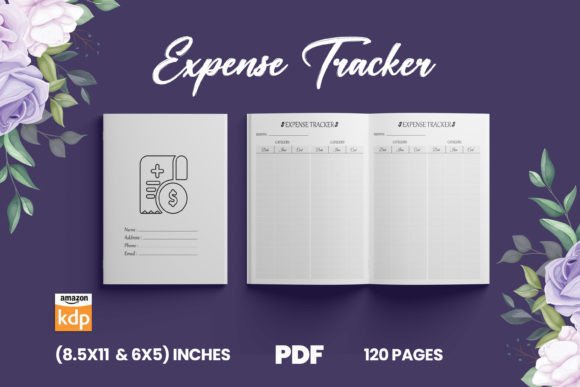
At its core, an Expense Tracker Notebook is a dedicated journal for recording income and outflows. The version described here features both weekly and daily tracking pages, printed on quality paper, and is available in two sizes: 8.5 x 11 inches and 6 x 9 inches. With 120 pages, it offers several months of tracking capacity. It is also provided as a PDF printable file, which means you can print additional pages or reuse the format. The intended use spans personal finance, bookkeeping, budgeting, and small business expense management.
What sets this notebook apart from generic blank notebooks is its structured layout. Instead of starting from scratch, you get pre-designed sections that prompt you to log dates, categories, amounts, and notes. This structure reduces friction and encourages consistency, which is often the hardest part of money management.
Why Consider a Paper-Based Expense Tracker?
Many people assume that digital tools are always superior for tracking finances. However, paper-based systems have distinct advantages that make them appealing for certain users and situations.
Reasons You Might Be Interested
- Simplicity and Focus: No notifications, no ads, and no data entry errors from app glitches. Writing by hand can also reinforce memory and awareness of spending patterns.
- Privacy and Control: A paper notebook never gets hacked, sold, or compromised. Your financial data stays entirely in your hands.
- No Technology Required: You do not need a smartphone, tablet, computer, or internet connection. This is especially useful for people who want to reduce screen time or who work in environments where devices are impractical.
- Customizable Use: The PDF printable format means you can print only the pages you need, adjust the layout if you edit the file, or combine it with other planning tools.
- Low Commitment Cost: Compared to premium budgeting software or apps with monthly subscriptions, a notebook is a one-time purchase. You can also print it yourself at minimal cost.
Who Might Find It a Strong Fit
This Expense Tracker Notebook is particularly well-suited for:
- Individuals who prefer analog methods: If you already use a paper planner, bullet journal, or diary, adding an expense ledger feels natural.
- Small business owners with simple finances: Freelancers, sole proprietors, and microbusinesses that do not require complex accounting software can use this notebook to log daily receipts and expenses for tax preparation.
- People new to budgeting: The structured format reduces the intimidation of starting from scratch. You simply fill in the blanks.
- Those trying to build a tracking habit: Writing by hand once or twice a day can create a routine that sticks better than sporadic app usage.
- Users who want a backup or offline option: Even if you primarily use digital tools, a paper ledger can serve as a fallback when technology fails or when you travel.
Evaluating the Benefits and Practical Tradeoffs
Like any tool, the Expense Tracker Notebook has clear benefits, but it also comes with limitations that you should weigh against your personal needs.
Benefits Worth Noting
- Structured Tracking: The weekly and daily layouts help you organize entries logically. You are less likely to forget entries because the format prompts you to log details.
- Durable Format: Quality paper means ink does not bleed through easily, and the notebook holds up to daily use. The two size options allow you to choose between portability (6x9) and writing space (8.5x11).
- Printable Flexibility: Because it comes as a PDF, you can print single pages if you only need to track certain weeks, or you can reprint the entire notebook if you fill it up. This extends the life of the system indefinitely.
- Clear Categorization: Most expense trackers encourage you to assign categories (groceries, utilities, supplies, etc.), which makes it easier to analyze spending patterns at a glance.
Tradeoffs and Considerations
No system is perfect, and paper tracking has inherent drawbacks that may matter depending on your situation.
- Manual Calculation Required: Unlike spreadsheet software or apps that auto-sum, you must add up totals yourself. This takes time and introduces the risk of arithmetic errors.
- Limited Analysis: Spotting trends across months requires flipping through pages and manually comparing data. Digital tools can generate charts and reports instantly.
- No Sync or Backup: If you lose the notebook, your data is gone. There is no cloud backup. For critical business finances, this could be problematic.
- Space Constraints: 120 pages may sound like a lot, but if you track multiple transactions daily, you might run out sooner than expected. The PDF printable format mitigates this, but you still need to manage printing and binding.
- Not Ideal for High-Volume Tracking: If your business processes dozens of transactions per day, a paper ledger becomes cumbersome and inefficient. Digital accounting software is better suited for scale.
When Alternatives May Be Worth Considering
While the Expense Tracker Notebook is a capable tool, it is not the right choice for everyone. Here are situations where you might look elsewhere.
- You need automatic categorization and reporting. Apps like Mint, YNAB, or QuickBooks automatically import transactions and generate spending summaries. This saves time and reduces manual effort.
- You manage multiple accounts or complex finances. If you have several bank accounts, credit cards, investments, and loans, a paper ledger quickly becomes unwieldy. Spreadsheets or accounting software offer better organization.
- You want real-time collaboration. If you share finances with a partner or accountant, a digital system allows simultaneous access. A paper notebook is inherently single-user.
- You are prone to losing physical items. If your wallet, keys, and phone disappear often, a paper notebook may not be the safest place for your financial records.
- You need integration with tax software or bank feeds. Digital tools can export data directly into tax forms or reconcile with bank statements. Paper requires manual entry at every step.
If you fall into one of these categories, consider using a hybrid approach: a paper notebook for daily logging and a spreadsheet for monthly analysis. This gives you the benefits of handwriting while retaining digital flexibility.
Practical Decision-Making Insights
Choosing between a paper expense tracker and a digital alternative is not about which is objectively better. It is about which aligns with your habits, goals, and context. Here is a framework to help you decide.
Ask Yourself These Questions
- How many transactions do I track per week? If it is under 30, paper is manageable. If it is over 50, digital may save significant time.
- Do I enjoy writing by hand? If you find handwriting tedious, you will likely abandon the notebook quickly. If you enjoy it, you will stick with it.
- How important is data analysis to me? If you only need to know your total spending at the end of the month, paper works fine. If you want to compare categories over time, digital offers a clearer picture.
- What is my budget for this tool? The Expense Tracker Notebook is a low-cost option, especially if you print it yourself. Premium apps may cost $10-$30 per month. If cost is a factor, paper wins.
- Do I need to share this data? If you work with an accountant or share finances with a partner, consider whether paper or digital makes sharing easier.
How to Get the Most Out of This Notebook
If you decide to try the Expense Tracker Notebook, a few practices can improve your experience:
- Set a regular time to update it. Whether it is after each purchase or at the end of the day, consistency prevents backlogs.
- Use categories that match your spending. Customize the categories in the notebook to reflect your actual expenses. Generic categories are less helpful.
- Review weekly totals. Do not just record and forget. At the end of each week, look at your totals to identify patterns or surprises.
- Pair with a simple envelope or cash system. Some people find that using cash for discretionary spending and logging it in the notebook reinforces discipline.
- Keep the notebook accessible. Store it where you usually pay bills or review finances. If it is out of sight, it is easy to ignore.
Final Considerations for Your Evaluation
The Expense Tracker Notebook and Simple Money Management Ledger Notebook offer a tangible, focused way to manage money. They are especially effective for people who value simplicity, privacy, and a low-tech approach. However, they require discipline, manual effort, and a willingness to forego the automation that digital tools provide.
If you are currently struggling to track expenses because apps feel overwhelming or distracting, a paper notebook might be exactly what you need to reset your habits. Conversely, if you already feel burdened by manual tasks, adding a paper ledger could feel like extra work rather than a solution.
Consider your personal workflow, your tolerance for repetitive tasks, and your need for data analysis. There is no universal right answer. The best tool is the one you actually use consistently. The Expense Tracker Notebook is a solid candidate if that tool happens to be a simple, structured pad of paper and a pen.
Whether you choose this notebook, a digital alternative, or a hybrid of both, the most important step is to start. Tracking your expenses, in any form, is the foundation of financial awareness. And with awareness comes the ability to make intentional choices about your money.