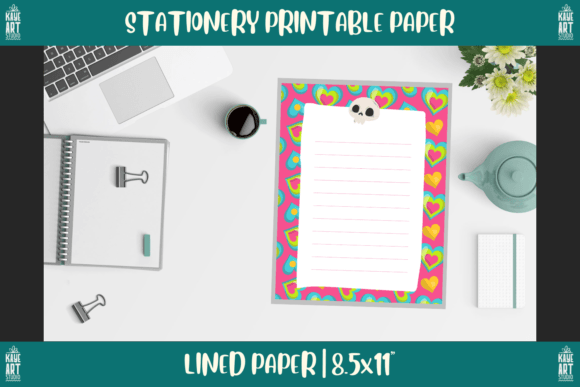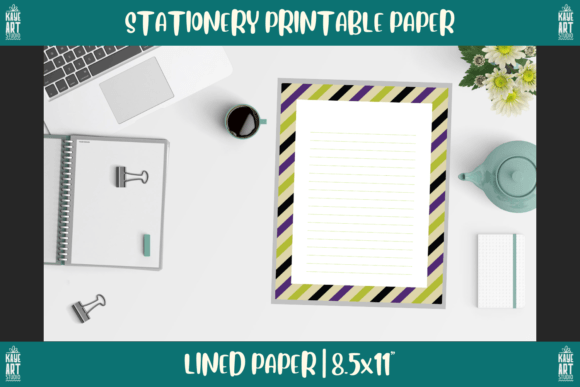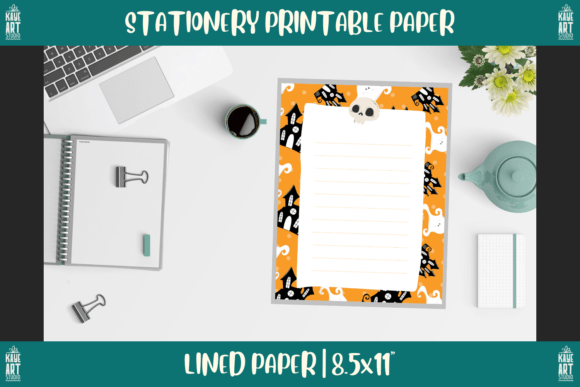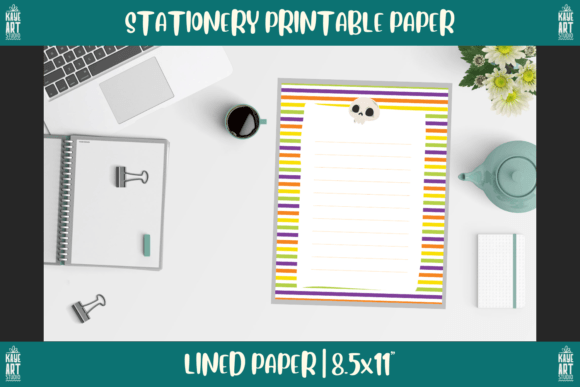
Bordered Stationery Printable Paper 203 for Creative Projects
There is something quietly satisfying about starting a project with the right blank canvas. Not every idea needs a full-blown layout or a complex grid from the start. Sometimes what you need is a piece of paper that feels intentional without shouting for attention. That is exactly the kind of flexibility Bordered Stationery Printable Paper 203 brings to the table. This collection is not just about having a few printable sheets handy. It is about having a versatile toolkit that adapts to whatever you are building, whether that is a digital planner, a physical journal, a low-content book for your KDP business, or a craft project that needs a clean foundation.
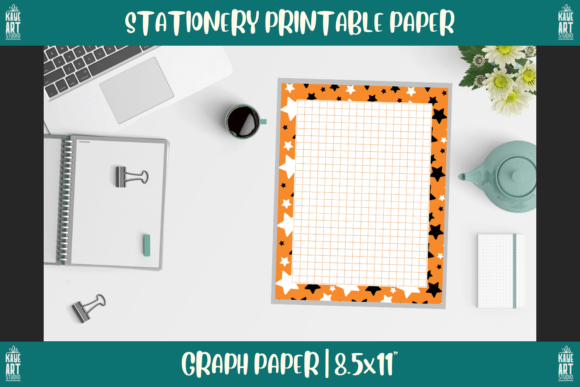
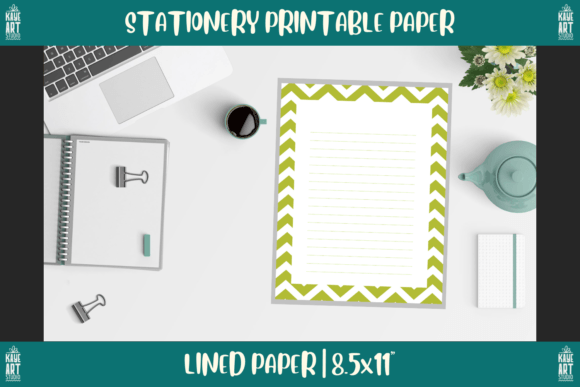
The set includes one unlined bordered paper, one graph paper, and two lined papers, all at a trim size of 8.5×11 inches with 300 DPI quality. The files come in both PNG and PDF formats, which means you can drop them directly into your workflow without converting or resizing. Whether you are working in Canva, Affinity, Photoshop, or even a word processor, these papers are ready to go.
A Versatile Foundation for Low-Content and No-Content Publishing
If you sell low-content or no-content books on Amazon KDP, you already know how important it is to offer interiors that feel complete but leave room for the buyer to make them their own. Bordered Stationery Printable Paper 203 is designed exactly for that purpose. The bordered papers give each page a defined frame that instantly makes it feel more polished than a plain white sheet. The lined papers are great for journals, notebooks, and diaries where users need guided writing space. The graph paper works beautifully for bullet journals, habit trackers, or any project that benefits from a structured grid.
Because the set includes multiple styles, you can mix and match pages within a single book. A gratitude journal might start with lined pages and include a graph paper spread for tracking moods or habits. A creativity workbook could combine unlined bordered pages for drawing with lined pages for reflection. Having all four variations in one package means you do not have to source different files for different sections of your book.
Practical Applications for Stationery and Digital Planners
Stationery lovers and digital planner creators will find a lot to appreciate here. The unlined bordered paper is ideal for mind maps, sketches, or any page where the content takes a visual form. The border keeps everything contained without restricting where you place your elements. For digital planners, the PDF and PNG formats mean you can import the pages into apps like GoodNotes, Notability, or Procreate. The 300 DPI resolution ensures that the lines and borders remain crisp even when zoomed in or printed at full size.
The lined papers are straightforward but thoughtfully designed. The spacing works well for handwriting in a standard size, and the border adds a subtle structure that makes notes easier to scan later. Whether you are creating a daily planner insert, a meal planning pad, or a set of printable to-do lists, these pages give you a consistent base that does not compete with the content you add to it.
How Printable Paper Sets Influence Readability and Visual Hierarchy
Good design is often invisible. When you look at a page and it feels easy to read or natural to write on, that is not an accident. It is the result of thoughtful decisions about spacing, contrast, and structure. The bordered papers in this set create a clear visual boundary that helps the eye stay focused on the main content area. This is especially useful in planners and journals where the user is navigating multiple types of information on a single page.
Graph paper brings its own kind of order. The grid provides a subtle reference for drawing diagrams, plotting data, or keeping handwriting aligned without the rigidity of ruled lines. For designers working on brand identity projects or packaging concepts, graph paper is a practical tool for sketching layouts, testing proportions, or mapping out typography. The grid is light enough to be unobtrusive but present enough to be useful.
In terms of visual hierarchy, the lined papers guide the flow of text naturally. The lines create horizontal rhythm, which is especially helpful for users who tend to write at an angle or need a little extra structure to keep their notes tidy. Combined with the border, each page feels like a contained unit of thought rather than just a sheet of paper.
Choosing the Right Paper Style for Your Project
When you are putting together a product or a personal project, the choice of paper style should match the intended use. For example, if you are creating a productivity planner, the lined papers are your workhorses. They work for daily tasks, weekly reviews, and habit logs. The graph paper can serve as a monthly overview or a goal-tracking spread where you want to visualize progress over time. The unlined bordered paper is perfect for a vision board page, a brainstorming section, or a creative prompt that invites drawing or collage.
For a KDP book, consider how the pages will feel as a complete set. If every page looks the same, the book can feel monotonous. By rotating between the four paper styles, you add variety without sacrificing cohesion. The border acts as a unifying element across all the pages, so even when the content layout changes, the visual identity stays consistent. That consistency builds brand recognition and helps your products stand out in a crowded marketplace.
Testing Font Pairings with Printable Papers
Typography enthusiasts will appreciate how these papers work as a testing ground for font pairings. Because the pages are simple and clean, they do not interfere with the typefaces you place on them. You can experiment with a bold serif font for headings alongside a light sans serif font for body text, and the paper will support that contrast rather than fight it. For logo design or branding exercises, the graph paper in particular is useful for testing proportions and alignment.
If you are developing a brand identity, you might use the unlined bordered paper to sketch out logo variations or test color palettes. The border provides a natural margin that mimics how the final design might appear on a business card or a letterhead. This kind of real-world testing is invaluable before you commit to a final direction.
Practical Guidance on Fit and Licensing
Before you integrate Bordered Stationery Printable Paper 203 into your commercial work, it is worth considering fit and licensing. These papers are designed for a standard 8.5×11 inch trim size, which is one of the most common formats for both print and digital products. If you are selling through KDP, this size works well for paperbacks and spiral-bound books. The 300 DPI resolution ensures high-quality prints that look professional even when printed at home or through a print-on-demand service.
The PNG format is ideal for digital use. You can import it directly into your design software and overlay text, graphics, or other elements. The transparent or white background (depending on your specific needs) gives you flexibility to layer content without extra cleanup. The PDF format is better for print-ready files, especially if you are uploading directly to a publishing platform that prefers PDFs.
In terms of commercial licensing, these papers are intended for use in your own products. That includes KDP interiors, printable planners, digital stationery, and physical crafts. You can modify them, combine them with other elements, and sell the resulting product. The key is that you are using them as a component of a larger work, not reselling the raw papers themselves. This is a standard commercial use model that works well for small business owners and independent creators.
Building Brand Recognition with Consistent Design Assets
Consistency is one of those things that separates a casual product from a professional one. When you use the same bordered paper style across multiple products, your audience starts to recognize your work. It becomes part of your visual signature. This is not about being repetitive. It is about creating a reliable experience for your customers. They know what to expect when they open your planner or your journal, and that builds trust.
The bordered papers in this set are neutral enough to work with almost any design style, from minimalist to decorative. You can pair them with a clean modern typography approach or add embellishments like stickers, stamps, or hand-lettering. The borders are simple enough that they do not dictate the mood of the page. You control the personality through your choice of fonts, colors, and layout.
For content creators who sell on multiple platforms, having a consistent paper template streamlines your production process. You are not reinventing the layout every time you start a new project. You grab the appropriate page style, drop in your content, and move on. That efficiency frees you up to focus on the creative parts of the work that actually matter.
Real-World Examples and Design Observations
Imagine you are putting together a wedding planning binder. The lined pages are perfect for vendor contact lists and budget tracking. The graph paper works for seating charts and floor plans. The unlined bordered paper gives you space for sketching bouquet ideas or testing invitation layouts. Because all the pages share a consistent border treatment, the binder feels like a cohesive product rather than a collection of random sheets.
Or consider a teacher creating classroom resources. The graph paper can be used for math worksheets or science diagrams. The lined papers work for handwriting practice or journal prompts. The unlined bordered paper is great for art projects or creative writing where students need a defined space without lines. Having all four styles in one set means you can print exactly what you need for each activity without digging through multiple files.
From a design standpoint, the 300 DPI resolution is worth emphasizing. When you are printing at home, many commercial printables are only 150 or 200 DPI, which leads to fuzzy lines and uneven borders. At 300 DPI, the lines appear sharp and consistent. This is especially noticeable on the graph paper, where thin grid lines need to be precise to be useful. The quality difference is subtle but real, and it is one of those details that customers notice even if they cannot articulate what is different.
Making the Most of This Printable Set
If you are new to using printable papers in your business or creative practice, start by exploring each style on its own terms. Print a few sheets of each and test them with different tools. Write on them with pen, pencil, and marker. Try them in a binder and a spiral notebook. See how they behave in your printer and how the border looks with your preferred margins. This kind of hands-on testing will tell you more about the product than any description can.
For experienced creators, these papers are a reliable base that you can adapt to your existing workflows. They work with digital planning apps, print-on-demand platforms, and traditional printing. The file formats are standard, so you will not run into compatibility issues. The design is straightforward, which means you can layer your own branding elements, headers, or decorative accents without visual clutter.
Ultimately, the value of a set like this comes down to how much it simplifies your process. When you have good foundational assets, you spend less time on setup and more time on the work that matters. Whether you are publishing on KDP, designing digital planners, or crafting stationery for your shop, these papers give you a solid starting point without prescribing what you create. That is the kind of tool every creator needs in their arsenal.